
Dispatch · July 2, 2026 · 7 min · By Umberto Salazar
Diet and supplements for vitiligo: what the evidence actually shows
Antioxidants, vitamin D, and diet get a lot of attention. Here is what holds up and what does not.
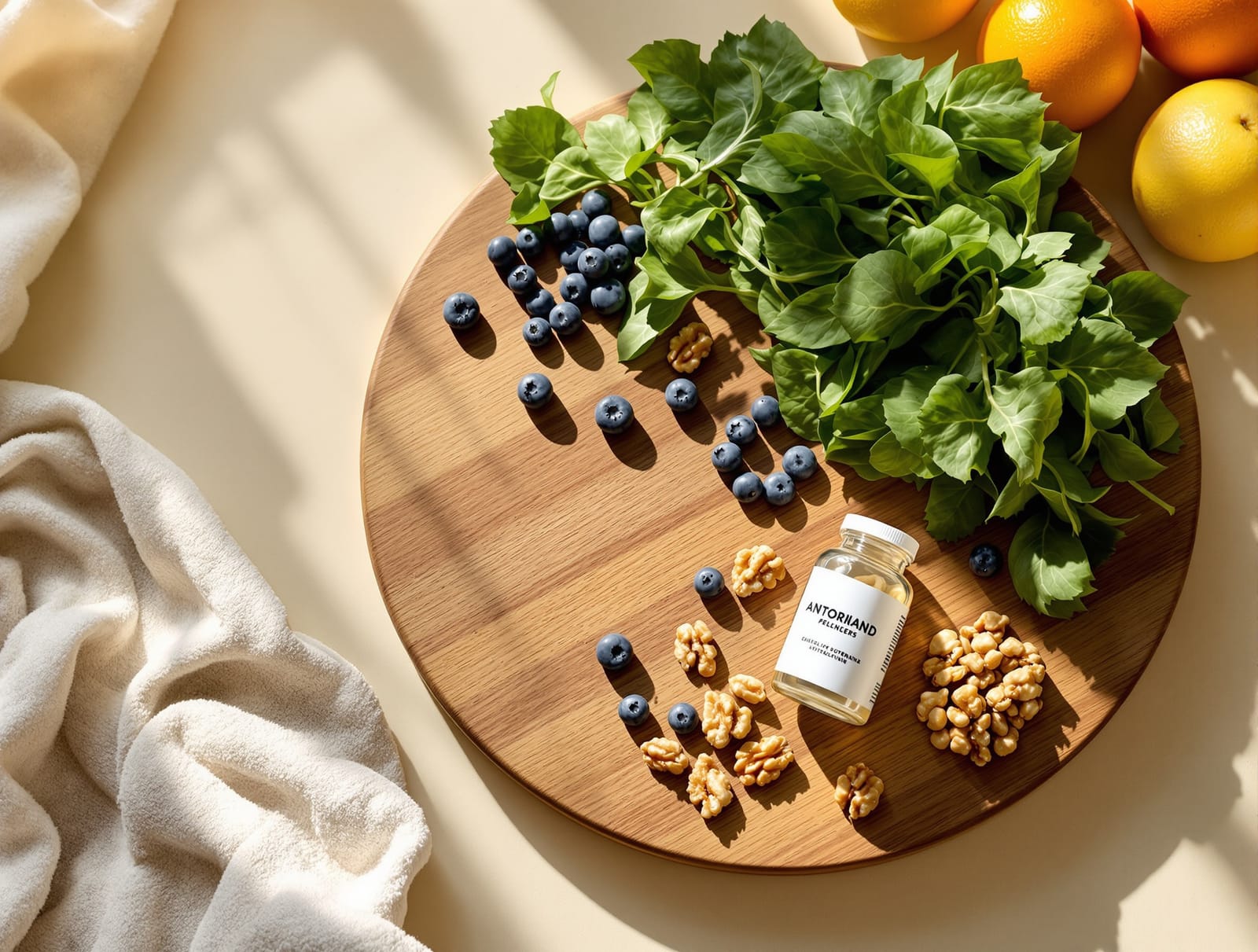
One of the most common questions people ask after a vitiligo diagnosis is whether the right foods or supplements can bring their color back. It is an appealing idea, and the internet is full of confident claims. The honest answer is more measured: nutrition can play a supporting role, but no diet or pill repigments skin on its own, and the strongest evidence still points to medical treatment as the foundation.
Why nutrition enters the conversation at all. Vitiligo is an autoimmune condition, and researchers have long noted that oxidative stress, an imbalance between damaging free radicals and the body's antioxidant defenses, appears to contribute to the destruction of pigment cells. That biology is why antioxidants keep coming up. The theory is reasonable; the clinical proof that eating more of them reverses vitiligo is thinner than the enthusiasm suggests. The National Institute of Arthritis and Musculoskeletal and Skin Diseases notes that vitiligo results from the loss of melanocytes and that treatment focuses on restoring color and slowing the immune process, not on diet (NIAMS).
Vitamin D: worth checking, not a cure. Low vitamin D is common in people with autoimmune conditions, including vitiligo, and correcting a genuine deficiency is sensible general health advice. Some small studies have explored higher-dose vitamin D as a vitiligo treatment, but the results are preliminary and do not support megadosing on your own. The practical takeaway is to have your level checked and correct a real shortfall under medical guidance, rather than assuming vitamin D alone will restore pigment.
Antioxidants and the Ginkgo signal. Among supplements, one of the better-studied is oral Ginkgo biloba. A small randomized, placebo-controlled trial found that Ginkgo biloba was associated with a halt in the progression of limited, slowly spreading vitiligo and some repigmentation in a subset of patients (Parsad et al., Clin Exp Dermatol, 2003). It is a promising early signal, not a definitive verdict, and Ginkgo can interact with blood thinners, so it is not a casual purchase. Oral antioxidant combinations, such as vitamins C and E and alpha lipoic acid, have been studied mostly as add-ons to phototherapy rather than as standalone treatments, and the quality of evidence varies.
What about elimination diets? There is no proven vitiligo diet, and no specific food has been shown to cause or cure the condition. Gluten-free eating helps only the small subset of people who also have celiac disease, an autoimmune condition that genuinely warrants dietary change. For everyone else, cutting out food groups risks nutritional gaps without a payoff. The American Academy of Dermatology, in its patient guidance, centers vitiligo care on treatments like topical medications, light therapy, and newer targeted options, not on dietary restriction (AAD).
A sensible framework. If you want nutrition to help, the reasonable version looks unremarkable: a balanced, largely anti-inflammatory pattern rich in fruits and vegetables that naturally supplies antioxidants, correction of any documented deficiency such as vitamin D, vitamin B12, or iron, and caution with high-dose single supplements that promise dramatic results. Whole foods are almost always a better source of antioxidants than isolated megadose pills, which can carry their own risks, and a colorful plate of leafy greens, berries, citrus, and nuts covers most of what the research points to. There is also no need to spend heavily: the expensive proprietary blends marketed specifically for vitiligo rarely outperform an ordinary healthy diet, and none of them substitute for treatment that actually acts on the immune process. Mayo Clinic emphasizes that vitiligo treatment aims to restore skin color and that results are gradual, a reminder that patience and proven therapies matter more than any supplement aisle (Mayo Clinic).
Where supplements fit best. The most defensible role for antioxidants and vitamin correction is as a complement to medical treatment, not a replacement for it. Several supplement studies show their clearest benefit when paired with phototherapy, which fits the broader pattern in vitiligo care where combination approaches tend to outperform any single intervention. If you are considering a supplement, tell your dermatologist, both so it can be folded into a real plan and so you avoid interactions with prescribed treatments.
The takeaway. Food and supplements are a supporting act, not the headline. Eat well, fix genuine deficiencies, be skeptical of anything marketed as a natural cure, and put your energy into the treatments with the strongest track record. If your patches are new, spreading, or you are unsure what you have, that is the moment to see a dermatologist rather than to reach for a bottle, because early, evidence-based treatment remains the most reliable path back to color.
Related reading: Advances in vitiligo and repigmentation treatment.