
Field Notes · July 6, 2026 · 6 min · By Ximena Calloway
The weight of white patches: vitiligo and mental health
Pigment loss is medically benign and emotionally heavy. Treating both sides matters.
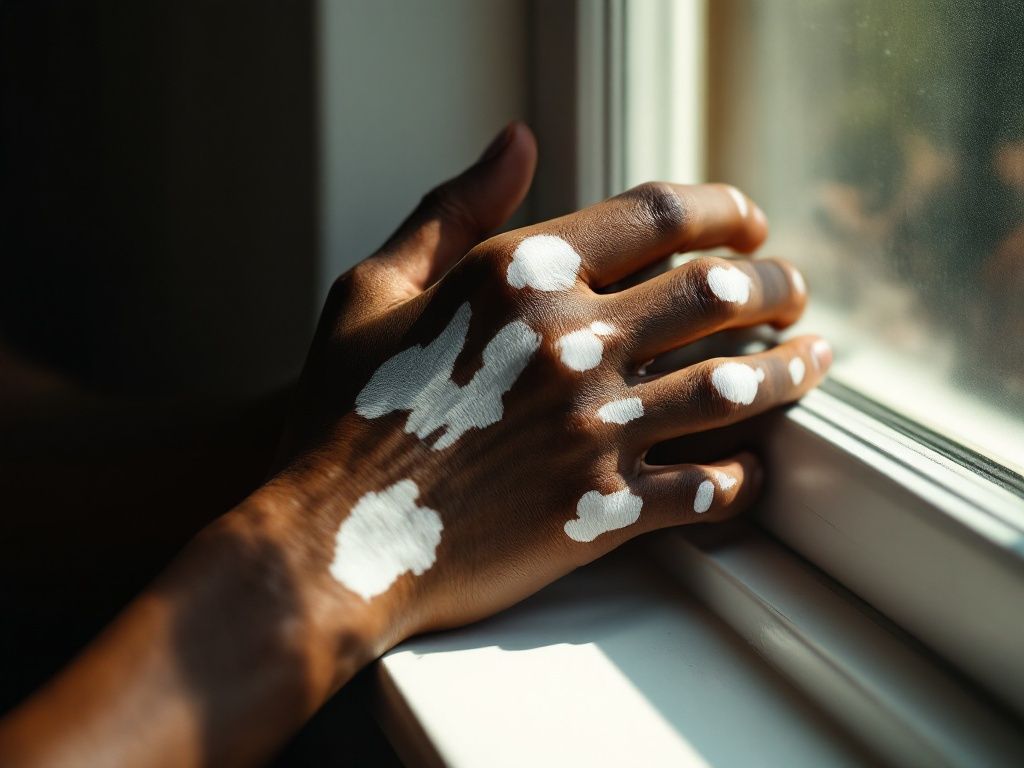
Dermatology textbooks classify vitiligo as medically benign: it does not hurt, spread to organs, or shorten life. People who live with it often describe something different. Because the condition rewrites the most visible thing a person owns, their skin, its real burden is frequently psychological, and research has steadily confirmed what patients have said all along.
What the evidence shows. Studies of people with vitiligo consistently find elevated rates of depression and anxiety compared with the general population, with global analyses suggesting that clinically meaningful depressive symptoms affect roughly a quarter of patients (PubMed). The impact tracks with visibility and contrast: patches on the face and hands, and disease in deeper skin tones where the difference is starker, tend to carry more distress. Age matters too. Vitiligo often begins before 30, landing in the years when identity, dating, and careers are being built, and adolescents can be particularly affected by teasing and social withdrawal.
Why it deserves a place in the treatment plan. The distress is not vanity, and it is not incidental. Stigma, intrusive questions, staring, and misconceptions that the condition is contagious are documented, everyday experiences for many patients. The National Institute of Arthritis and Musculoskeletal and Skin Diseases explicitly names the emotional and psychological effects of vitiligo as part of the condition's impact, alongside the visible one (NIAMS). A treatment plan that measures success only in percentage of repigmentation misses half the disease. The good news is that both halves respond to treatment, and they reinforce each other: patients who feel supported stick with slow therapies like phototherapy longer, and visible repigmentation, when it comes, often lifts mood in a way no reassurance can.
What actually helps, today. Several practical tools do not require waiting months for medical results. Cosmetic camouflage, from specialized makeup to self-tanner, gives back day-to-day control over who sees the condition and when, and studies of camouflage training programs show measurable improvements in quality of life. A short, rehearsed answer to the inevitable question ('It is called vitiligo, it is autoimmune, and it is not contagious') defuses most encounters and spares the exhausting improvisation. Sun protection keeps contrast from deepening. And connecting with others who have the condition changes the experience in a way clinicians cannot replicate; the Global Vitiligo Foundation maintains patient resources and support communities (Global Vitiligo Foundation).
When to bring in more help. Persistent low mood, anxiety that shapes daily decisions, social avoidance, or any thought of self-harm are reasons to involve a mental health professional, and dermatologists increasingly screen for exactly this. Cognitive behavioral therapy has evidence in skin conditions for reducing distress and improving coping, and treating depression or anxiety directly often matters more to daily life than another percentage point of repigmentation. There is no hierarchy of legitimacy here: seeing a therapist about a skin condition is as reasonable as seeing a dermatologist about it.
The takeaway. Vitiligo sits at the intersection of biology and identity. The medical arm of treatment is stronger than it has ever been, and the psychological arm, camouflage skills, community, a prepared script, and professional support when needed, is just as real a part of care. If patches are new or spreading, see a dermatologist early; and whichever treatments you choose, let the plan take the whole person seriously, not just the skin.
Related reading: Cosmetic camouflage for white patches.