
Advances · July 15, 2026 · 7 min · By Wallace Furukawa
Depigmentation therapy: when the goal is to remove the remaining color
For a small group with widespread vitiligo, evening the skin means lightening the pigment left behind rather than restoring it. Here is how it works and who it suits.
Nearly every treatment for vitiligo is built around one goal: adding pigment back. Creams calm the immune attack, phototherapy coaxes surviving color to spread, and newer targeted drugs switch off the signal driving the disease. For most people, restoring color is exactly the right aim. But for a small number of people whose vitiligo has spread across most of the body, the more realistic path can run in the opposite direction. Depigmentation therapy sets out to remove the pigment that remains, so that skin settles into one even tone. It is uncommon, deliberate, and permanent, and it deserves a clear-eyed explanation.
Who it is for. Depigmentation is not a starting point and not a general option. Dermatologists reserve it for extensive, stable vitiligo, typically when white patches already cover a large share of the body and repigmentation treatments have genuinely failed or are impractical to pursue across so much skin. The remaining islands of normal color, rather than the white areas, become the thing that stands out, and evening the two by lightening the pigment left behind can be less of an uphill battle than trying to repaint the majority. The National Institute of Arthritis and Musculoskeletal and Skin Diseases lists depigmentation among the recognized approaches for widespread disease (NIAMS). Because the decision is significant, it belongs in a careful conversation with a dermatologist rather than a self-directed experiment.
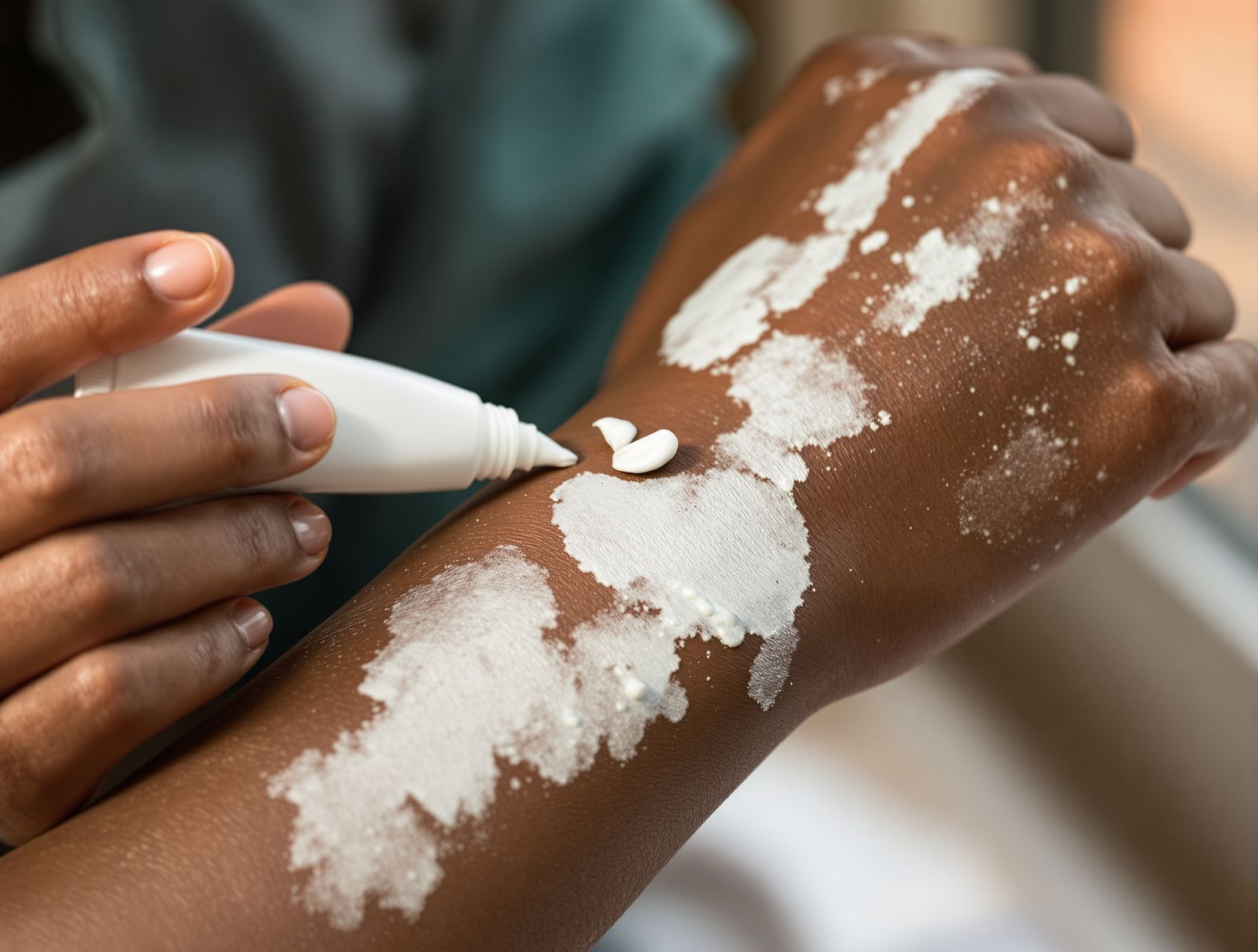
How it works. The main agent is monobenzyl ether of hydroquinone, usually shortened to monobenzone. It is not an ordinary skin lightener. Everyday brightening creams temporarily dial down pigment production and fade once stopped, but monobenzone is selectively toxic to melanocytes, the cells that make pigment, and destroys them where it is applied. That is why its effect is lasting rather than cosmetic. It is applied as a cream to the still-pigmented areas, usually once or twice a day, and the color fades gradually over many months as treated skin catches up to the surrounding white. Application is guided closely by a clinician, because the pace and pattern of lightening need monitoring.
What treatment actually looks like. Patience is the theme. Visible change is measured in months, and full, even depigmentation can take a year or longer. The transition is often patchy before it is uniform, with some areas clearing faster than others, which can be unsettling if it is not expected. The most common side effects are local: redness, itching, dryness, and sometimes an irritant or allergic contact dermatitis at the application site, which a dermatologist can manage by adjusting the routine. One consequence matters more than any short-term irritation. Skin stripped of melanin loses its built-in defense against ultraviolet light, so rigorous, lifelong sun protection becomes non-negotiable, both during treatment and for good afterward.
The permanence is the whole point, and the catch. Depigmentation is meant to be irreversible, and in practice it usually is. Melanocytes destroyed by monobenzone do not reliably return, and while stray repigmentation can occur, especially with sun exposure, deliberately reversing the process to restore an original skin tone is unpredictable and rarely complete. That permanence is the reason the choice carries so much weight. Good care front-loads the counseling: an honest discussion of expectations, the timeline, the sun-safety commitment, and the emotional dimension of changing one's appearance in a lasting way. Because vitiligo already carries a documented psychological burden, the mental-health side of the decision is not a footnote; our piece on vitiligo and mental health covers why support matters through any treatment path.
Weigh the alternatives first. For anyone who still has meaningful potential to regain color, adding pigment remains the better road, and depigmentation should sit at the end of the list rather than the front. Two alternatives deserve a real look before committing. Cosmetic camouflage, from specialized makeup to self-tanner, evens appearance with zero permanence and no medical risk, and many people find it does enough. And for patients with remaining repigmentation potential, medical therapy still has a role. The American Academy of Dermatology frames depigmentation as an option specifically for people with widespread vitiligo who prefer a uniform result, not as a routine treatment (AAD). Broader plain-language guidance on the range of pigment disorders is available through MedlinePlus.
The takeaway. Depigmentation therapy is the road less traveled in vitiligo care, and for good reason: it suits a narrow group, it asks for months of patience, and it cannot be taken back. But for the right, well-counseled person with extensive disease, it can end years of chasing an even tone by meeting the skin where it already is. The first step is not a prescription; it is a candid conversation with a dermatologist about whether your vitiligo is stable and widespread enough to make this the option that finally fits.
Related reading: Vitiligo: what it is and how it is treated.